
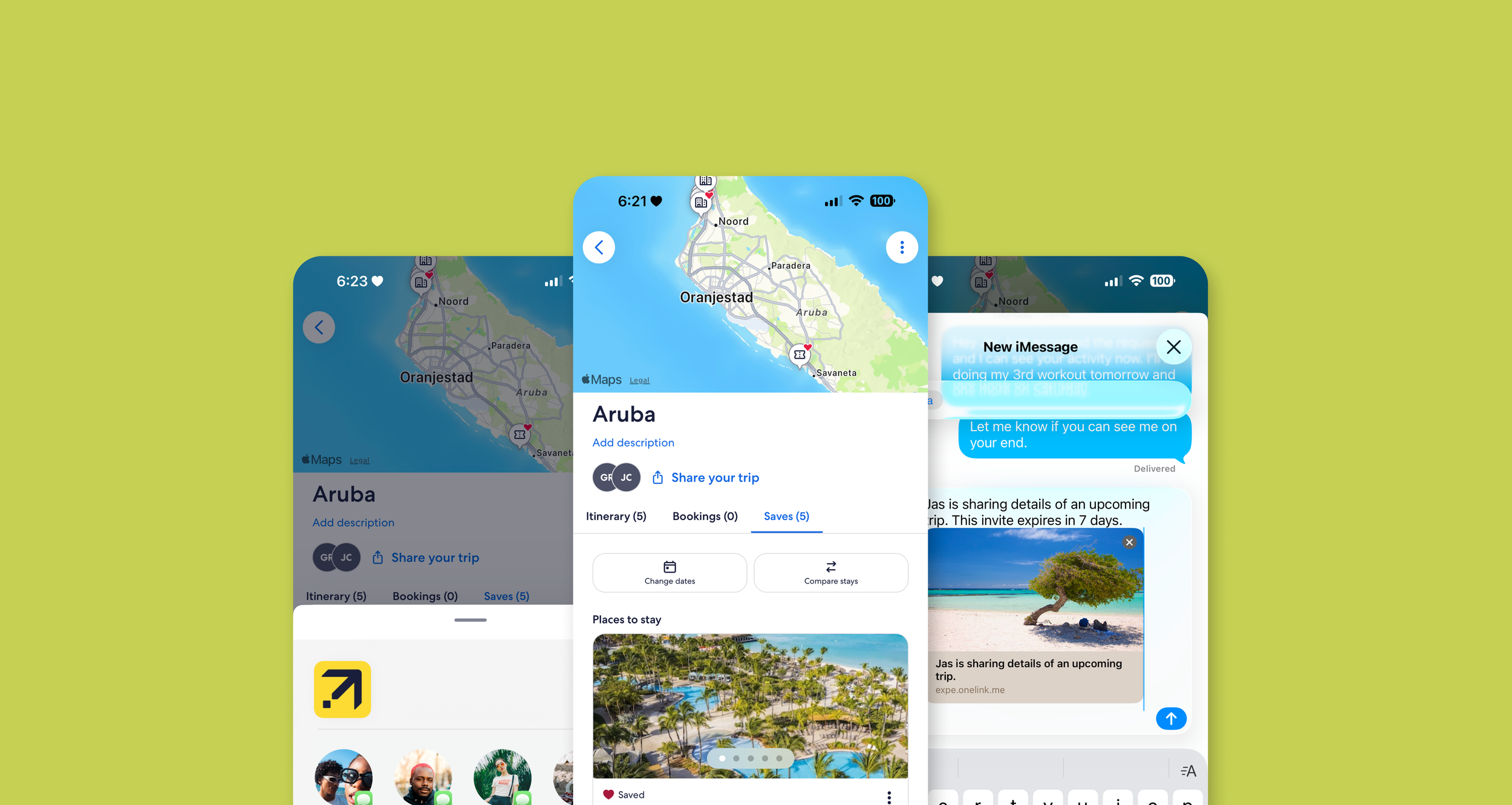

Improving Trip Invitations to Reduce Friction and Drive App Growth
Planning a trip is rarely a solo experience. Travelers naturally want to bring others in, sharing ideas, coordinating plans, and building excitement together. For this multi-brand initiative across Expedia Group products, including Hotels.com, Expedia, and Vrbo, we focused on making trip collaboration feel as effortless as the planning itself. However, the existing invite experience didn’t match that behavior. Instead of feeling seamless, inviting others felt like work.
Project Snapshot
ROLE
Lead UX/UI Designer
TIMELINE
3 week design sprint
THE TEAM
Trip Collaboration Product Manager, App Growth Product Manager, Trips Engineers, Trips Content Designer, Trips UX Researcher, Trips Technical Program Manager, Legal
THE PROBLEM
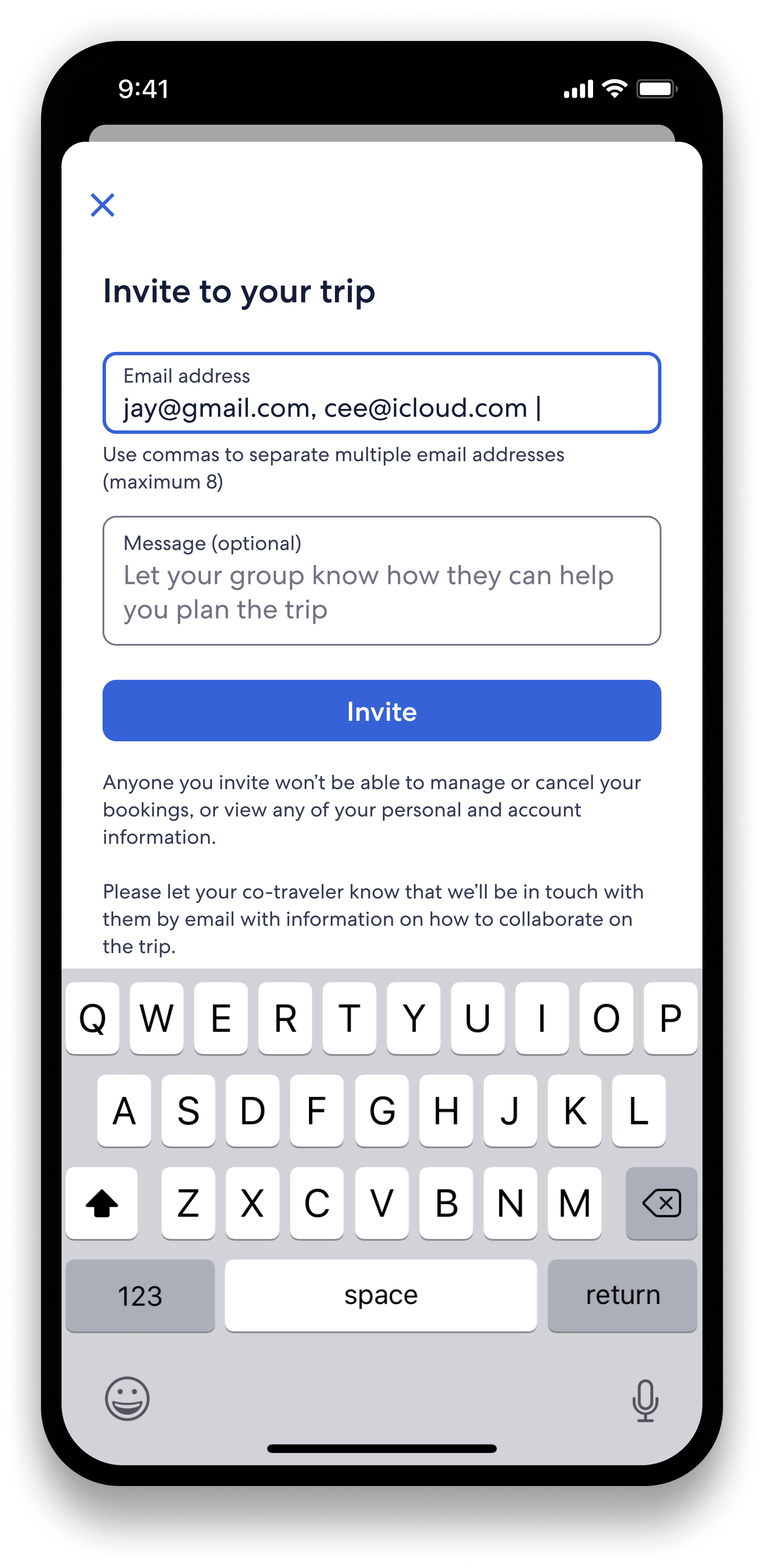
The existing invite experience relied heavily on email, requiring users to manually input collaborators’ email addresses. This created friction and led to high drop-off rates across both web and app experiences.
THE SOLUTION
On mobile, we introduced link-based sharing and native share sheet integration, allowing users to invite collaborators quickly and intuitively. On web, we redesigned the experience to prioritize link sharing while still supporting email invites.
THE RESULTS
Increased ease of collaboration for trip planners
350K+ app downloads
$3.5M+ gross profit across all Expedia brands including Hotels.com, Expedia, and Vrbo
Stronger alignment with app growth and collaboration goals
FRAMING THE PROBLEM
It became clear that inviting others felt harder than it should
FROM A USER PERSPECTIVE
The invite experience itself was creating friction. Trip creators were required to manually enter email addresses for each collaborator, adding unnecessary effort to what should have been a simple action.
FROM A BUSINESS PERSPECTIVE
The App Growth team wanted to drive more app downloads by leveraging collaborative trip planning. Invitations were seen as a key entry point for new users.
HOW MIGHT WE
We framed our direction through a series of “How might we” questions centered on both user behavior and business goals.
How might we make inviting others feel as effortless as sharing a link?
How might we reduce friction in the moment a traveler wants to collaborate?
How might we leverage that moment to drive app adoption, turning shared links into a seamless entry point into the experience?
RESEARCH & ANALYSIS
The data confirmed friction, and users told us why

PRODUCT DATA
The product managers and I observed significant drop-off rates during the invite flow across both web and app. This supported our hypothesis that the experience required too much effort for users to complete.

USER RESEARCH INSIGHTS
Our UX researcher conducted a study on trip collaboration behavior, revealing a consistent need for a simpler way to invite others. Users expressed frustration with the email-based flow. They often didn’t have email addresses readily available, found entering multiple emails tedious, and felt the process interrupted their planning momentum. Link sharing emerged as a clear, preferred alternative.

COMPETITIVE ANALYSIS
The content designer and I analyzed travel platforms and collaborative tools, where a clear pattern emerged. Link sharing was the dominant interaction model, native share sheets were widely used on mobile, and successful experiences minimized steps to preserve momentum. These insights confirmed that our current approach was out of sync with user expectations.
AUDITING THE EXPERIENCE
Before redesigning, we broke down where the experience was failing
We conducted a cross-functional audit of the existing invite flow to better understand where friction occurred. The experience required users to stop what they were doing, recall information they didn’t have readily available, and complete a multi-step form.
The primary issues included:
Too many steps to complete the invite process
Reliance on manual email entry
Lack of flexibility in how users could invite others
THE PATH FORWARD
Solving this meant designing for both user behavior and business goals
THE PLAN
We approached this as a dual-track solution across app and web, aligning on a strategy that balanced user needs with business goals. I partnered with stakeholders across product, engineering, and design to define a cohesive direction, ensuring the experience would feel consistent while adapting to each platform.
APP & MOBILE WEB APPROACH
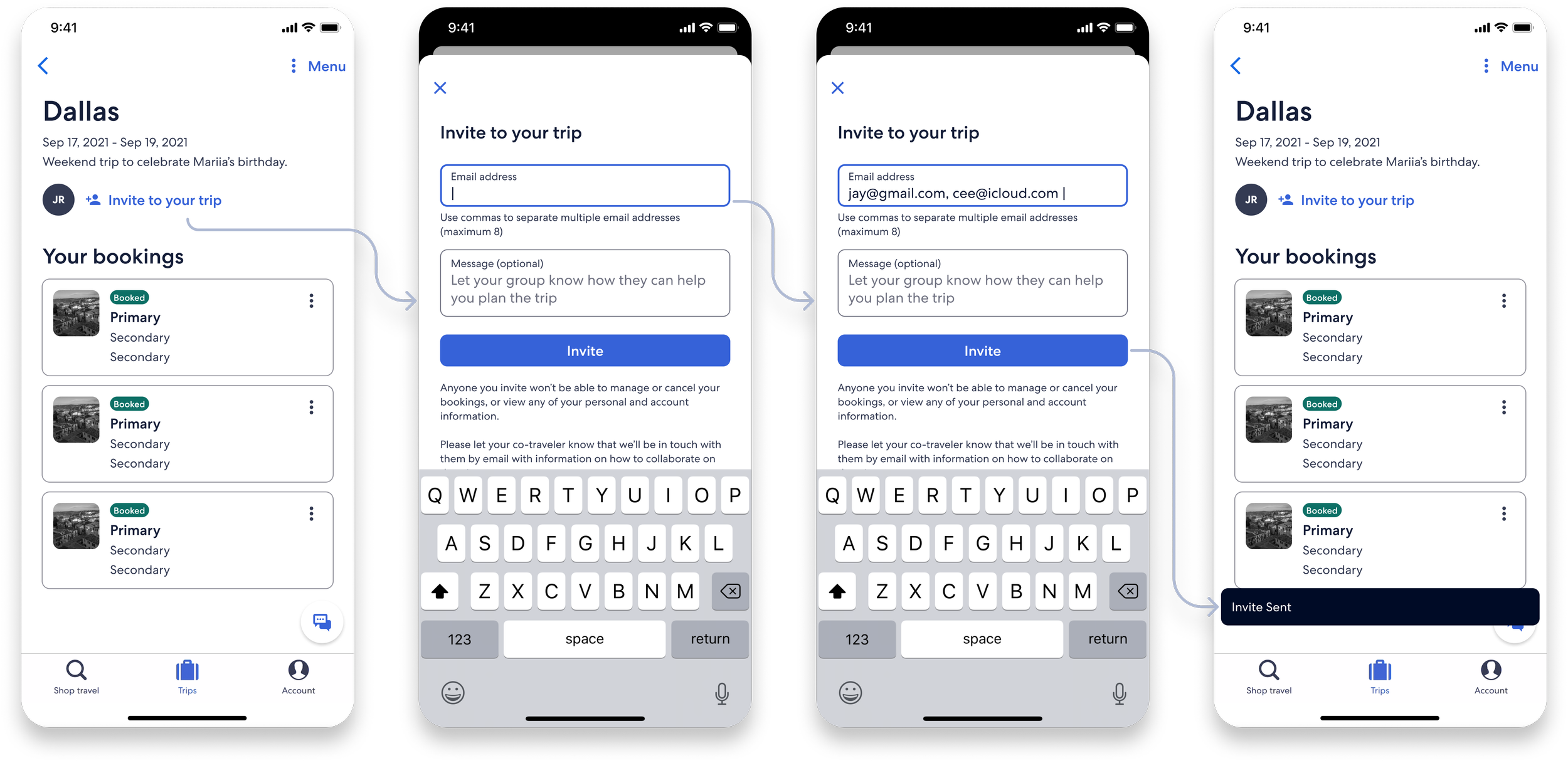
On app and mobile web, we focused on leveraging familiar, native patterns to reduce friction in moments of sharing. We aligned on implementing a native share sheet experience, allowing users to invite others in a way that felt immediate and intuitive, while also supporting link sharing as a key driver for app growth.
DESKTOP APPROACH
On desktop, where native patterns were less defined, I led UX exploration to identify the most effective interaction model. This included testing multiple directions to determine how to introduce collaboration in a way that felt clear, accessible, and aligned with user expectations.
MOBILE DESIGN SOLUTIONS
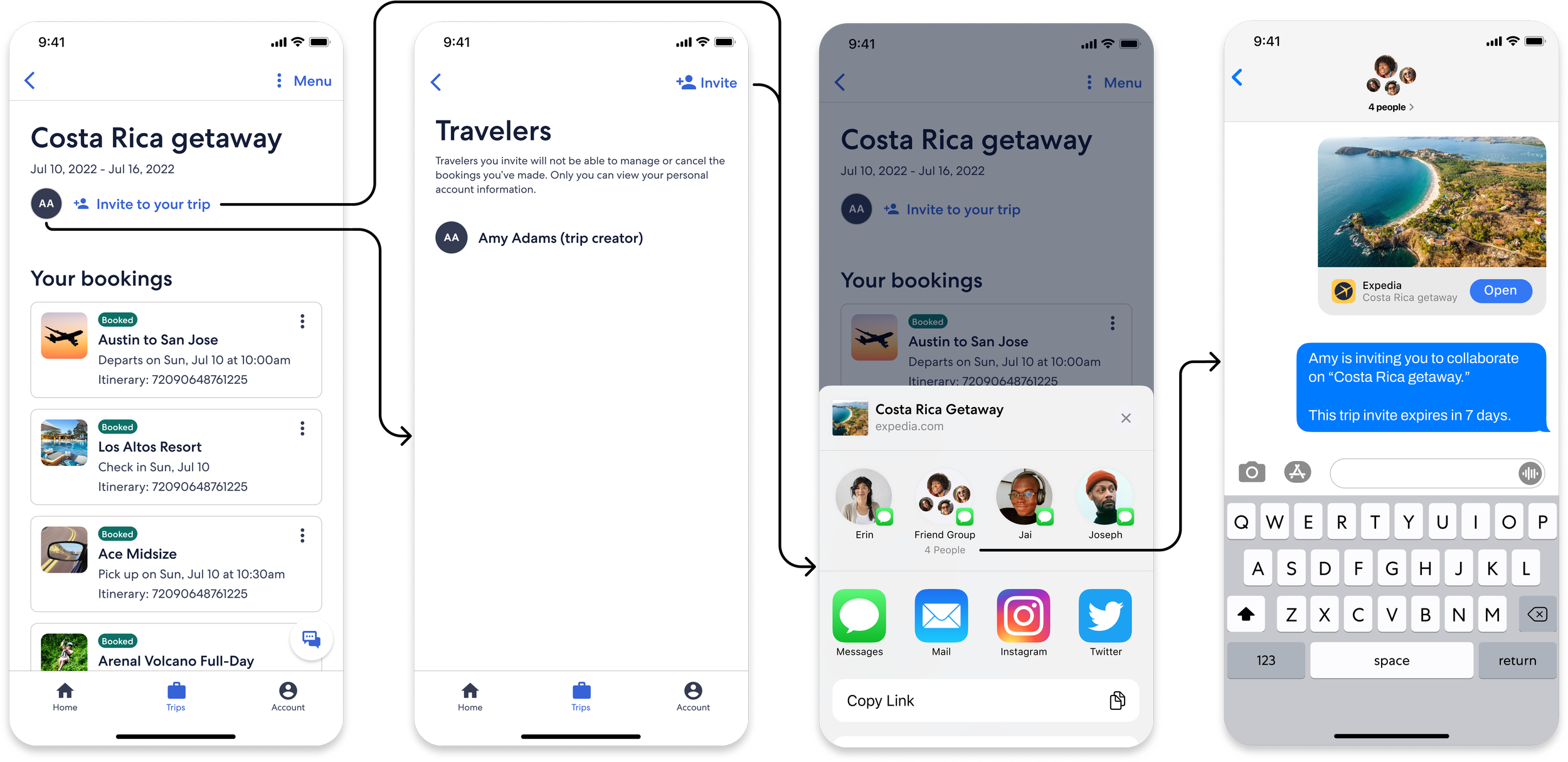
We simplified the experience on app & mobile web by meeting users where they already are
BEFORE
Users were required to manually input each collaborator’s information, creating unnecessary friction.
CONSTRAINTS
Stakeholders aligned on leveraging the native share sheet, with a strong focus on driving app adoption through link sharing. This set a more prescriptive direction for the experience. With development scoped to existing components, I worked within these constraints to balance business goals with a seamless and intuitive user experience.
SOLUTION
We integrated the native share sheet, allowing users to share trip boards using familiar platform behaviors.
DESKTOP DESIGN SOLUTIONS
On web, we explored multiple paths before landing on the simplest one
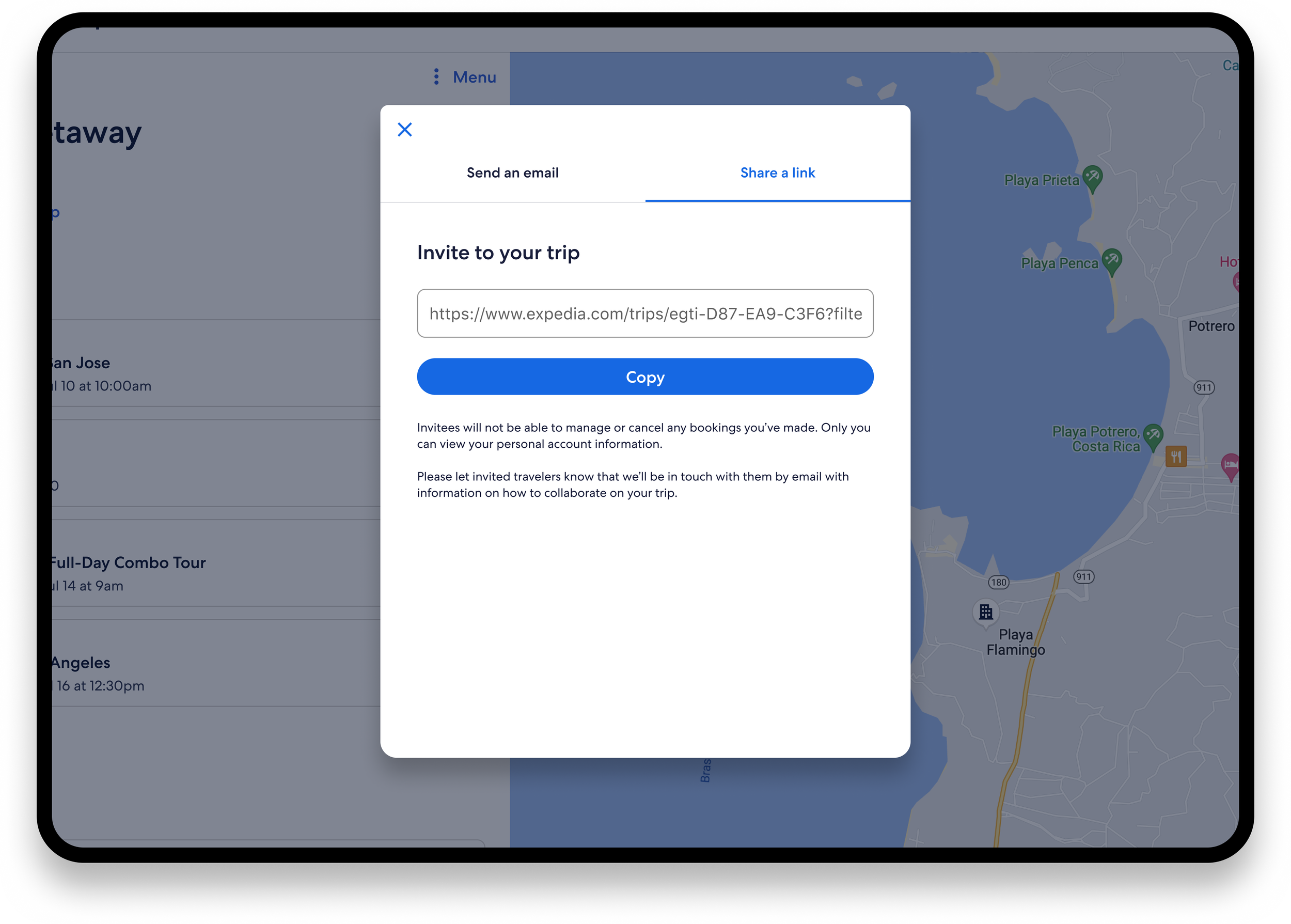
EXPLORATION ONE
Tabbed Invite Modal
Explored a tabbed modal to clearly present multiple ways to share a trip
Created a distinct separation between sharing options to reduce confusion and support decision-making
Included link sharing via copy and paste for quick, flexible collaboration
Considered future iterations such as QR code integration to support mobile handoff and drive app downloads
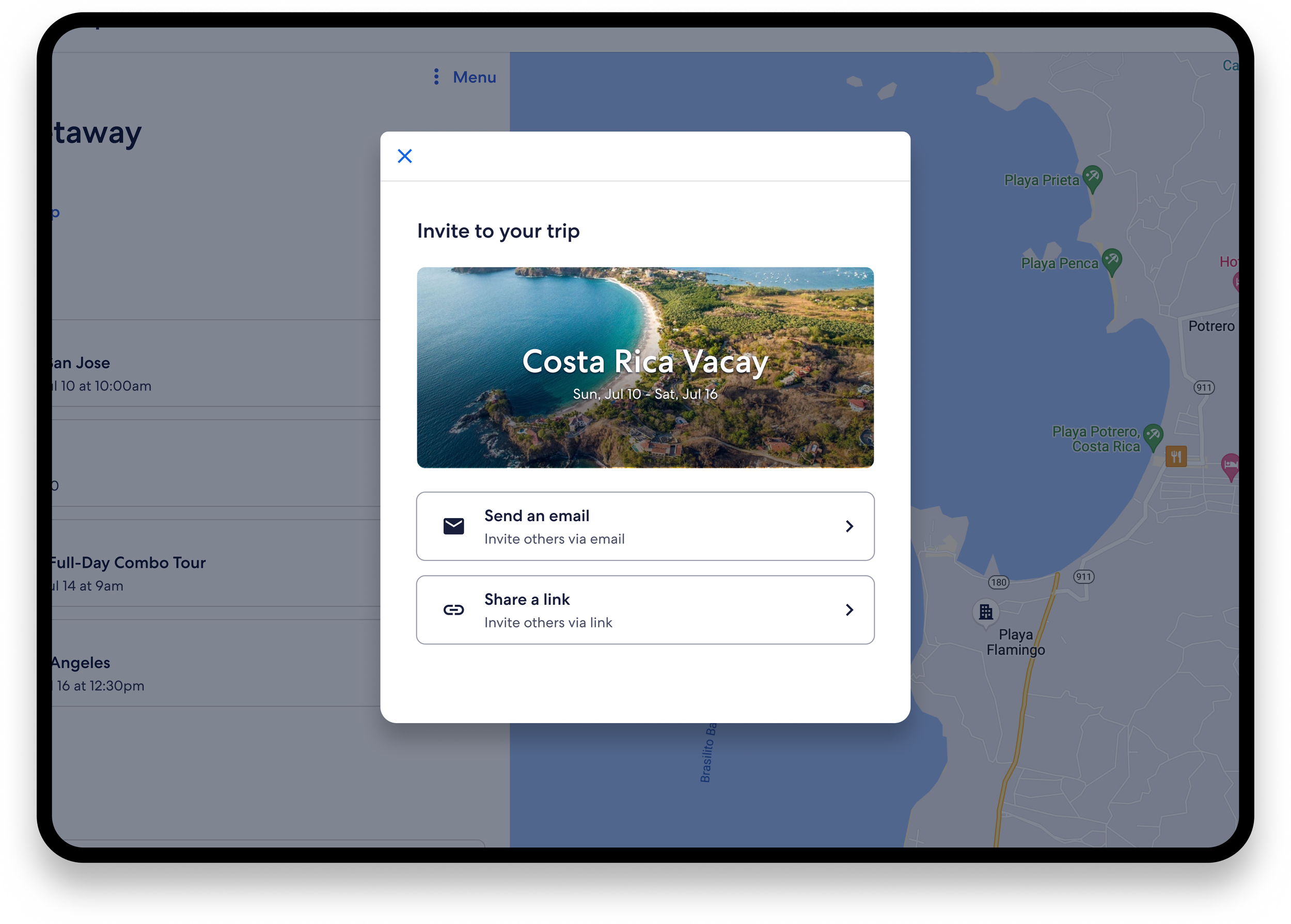
EXPLORATION TWO
Forked Invite Modal
Explored an option that incorporated a visual preview of the trip, shown on the thumbnail and within the shared email or link
Took inspiration from e-invite patterns, where the invitation preview is part of the sharing flow
Presented both sharing options as equal CTAs, maintaining the same visual hierarchy and prominence
Retained email sharing on web without prioritizing link sharing, unlike mobile where email was removed to focus on link sharing and app growth
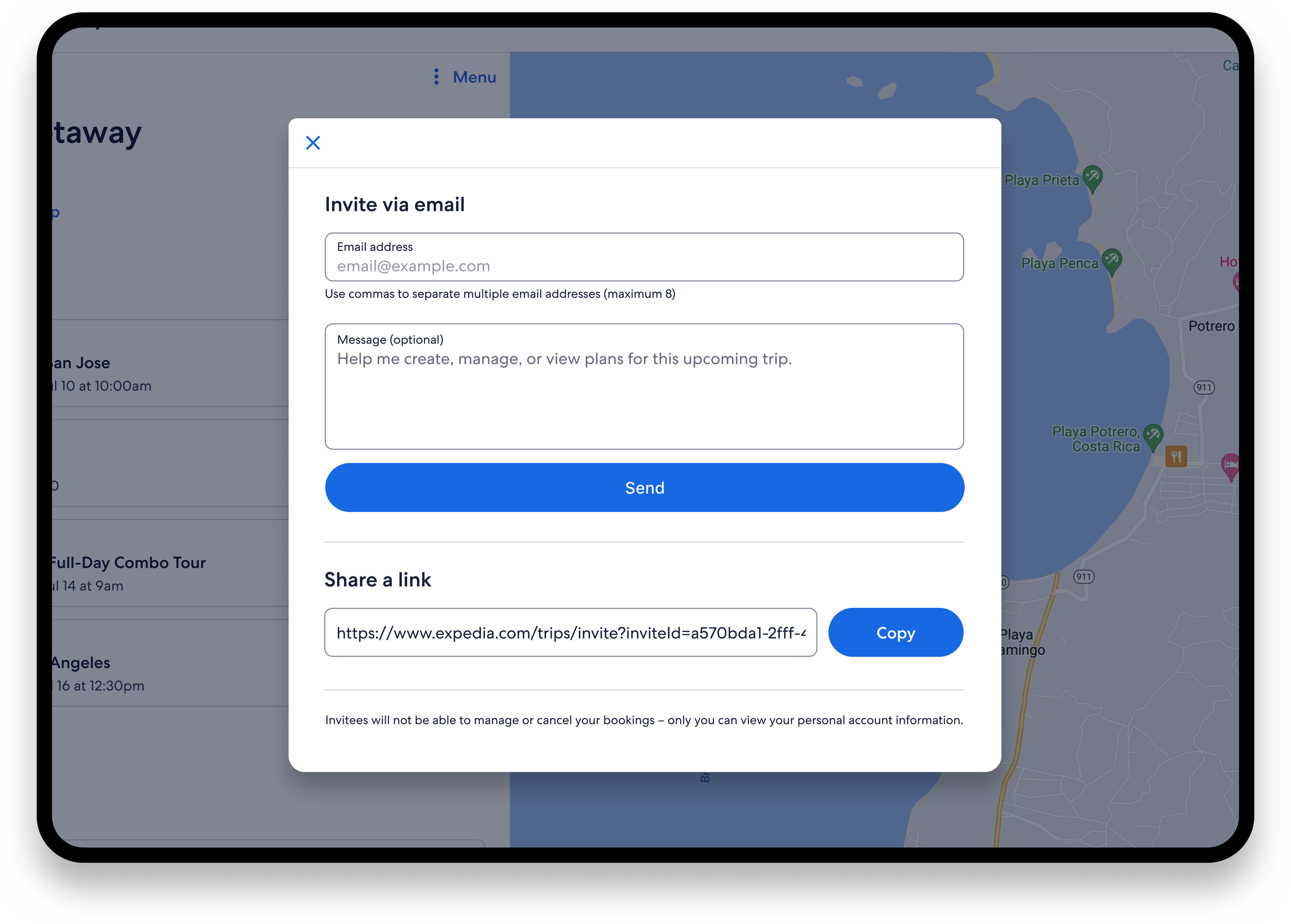
EXPLORATION THREE
Final Solution: A One Sheet Experience
Reduced the number of steps in the invite process while still offering multiple sharing options
Consolidated the experience into a single modal, lowering development effort and complexity
Presented all options at once to reduce cognitive load and support faster decision-making
Delivered the simplest solution that effectively reduced friction in inviting fellow travelers
TESTING THE FINAL SOLUTIONS
We validated the approach through rollout and performance
A/B TESTING
We tested the new experience against the existing production flow to measure impact. On mobile, this meant comparing link sharing to email-based invites, while on desktop we introduced link sharing alongside email to evaluate how expanding options influenced behavior.
PERFORMANCE METRICS
We measured success through invite completion rates and downstream engagement. This included tracking increases in trip invites sent and accepted, as well as app downloads driven by link sharing, with a particular focus on mobile where growth was a key priority.
TIMELINE
This work was executed and tested over the course of a quarter, with performance results analyzed in the following quarter to evaluate impact and inform next steps.
FINAL RESULTS
When inviting became easier, collaboration followed
350k+ app downloads
Rolling out link sharing across Expedia, Hotels.com, and Vrbo turned trip invites into a high-performing acquisition channel. By meeting users in moments of collaboration, we drove over 350K app downloads through shared links.
Easier to plan with travelers
By reducing friction in how users invite others, the experience better aligned with real-world travel behavior. Planning became more collaborative, intuitive, and enjoyable for users.
$3.5M+ gross profit
The increase in app downloads translated into measurable business impact, generating $3.5M in gross profit. By connecting collaboration with conversion, the experience contributed directly to revenue across brands.
Aligning with strategic app goals
The solution supported broader company priorities by integrating app growth into a core user flow. By embedding acquisition into collaboration, we created a scalable way to drive long-term engagement.